Processors/AMD Ryzen 5 9600
AMD · Ryzen 9000 (Granite Ridge, Zen 5) · Desktop
AMD Ryzen 5 9600
The AMD Ryzen 5 9600 is AMD’s Ryzen 9000 (Granite Ridge, Zen 5) desktop processor with 6 cores and 12 threads, a boost clock of 5.2 GHz and 32 MB of L3 cache.
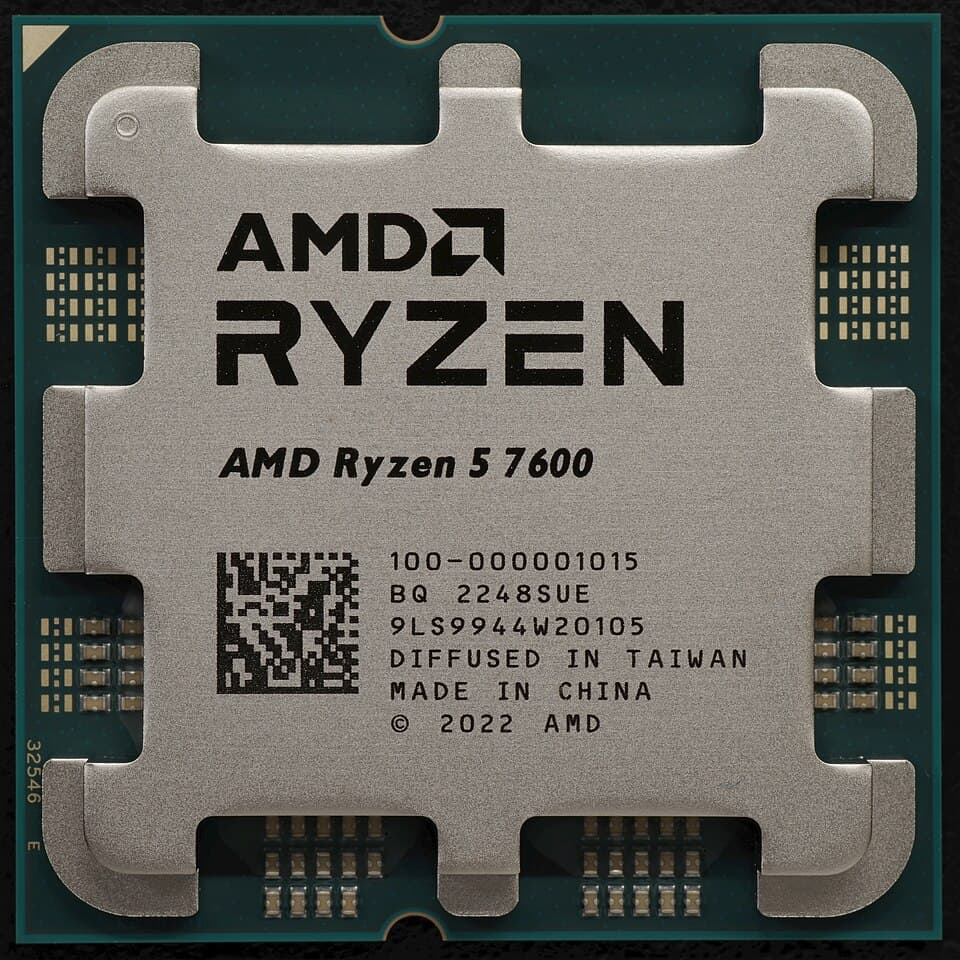
Drawn from this part’s own specifications. No openly-licensed photograph of the AMD Ryzen 5 9600 exists, so this is an illustration rather than a photograph.
Overview
The AMD Ryzen 5 9600 is AMD’s Ryzen 9000 (Granite Ridge, Zen 5) desktop processor with 6 cores and 12 threads, a boost clock of 5.2 GHz and 32 MB of L3 cache. These are the manufacturer’s published figures. They describe what the chip is designed to do, not what your particular machine does with it, and the gap between those two is usually cooling. A boost clock is a ceiling rather than a promise, and how long a processor holds it under continuous load is the one thing no specification sheet can tell you.
Specifications
- Cores
- 6
- Threads
- 12
- Base clock
- 3.8 GHz
- Boost clock
- 5.2 GHz
- L3 cache
- 32 MB
- TDP
- 65 W
- Socket
- AM5
- Process
- 4 nm
- Integrated graphics
- AMD Radeon Graphics (RDNA 2, 2 CU)
- Launched
- 2025-02-19
Physical cores. More helps sustained multi-threaded work, not single-task responsiveness.
The floor the vendor guarantees under load. Often closer to reality than boost.
A ceiling, not a promise. How long a chip holds it is the thing a spec sheet cannot tell you.
Design power, not measured draw. Where a range is shown, the manufacturer allows the laptop maker to choose within it, and the choice materially changes sustained performance.
Compare
The 6 nearest processors in the same segment, each with a published side-by-side.
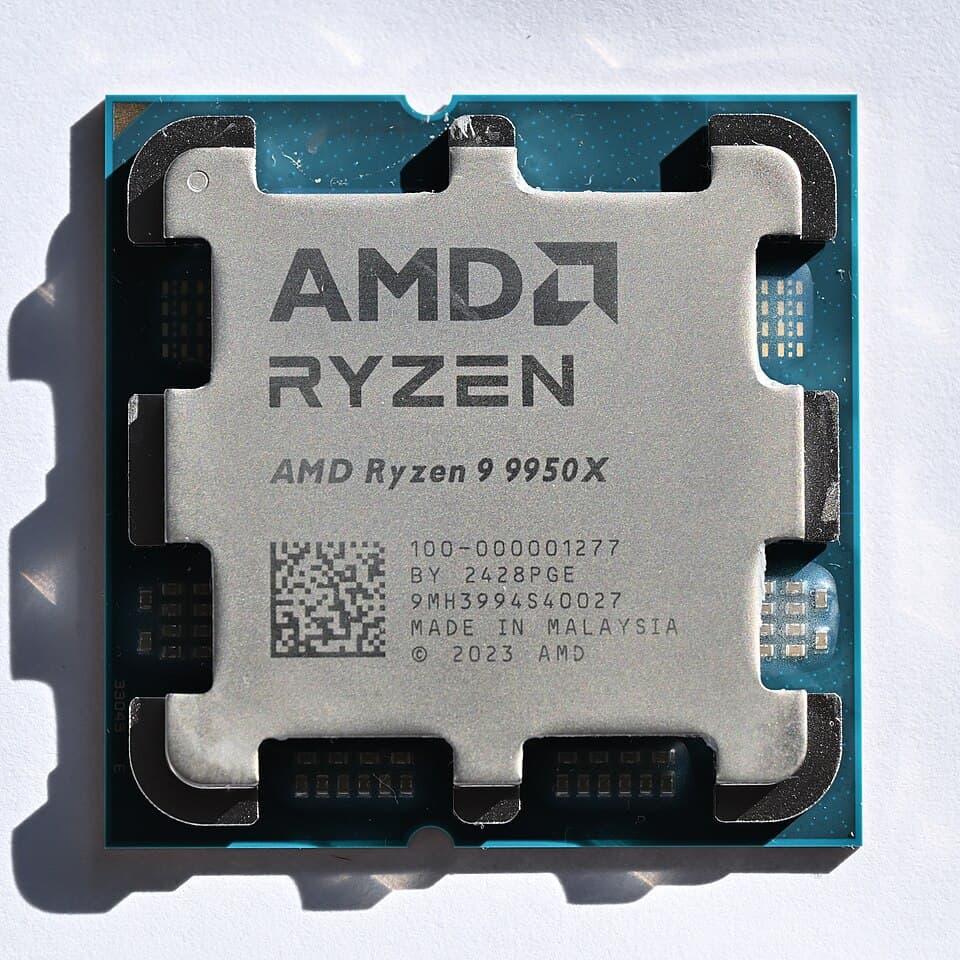
Other processors in AMD Ryzen 9000 (Granite Ridge, Zen 5)
What these numbers mean
Every figure on this sheet is a design target. None of it is a measurement.
Nothing above describes how a processor behaves twenty minutes into a sustained workload, which is where two chips with nearly identical specifications routinely diverge. A boost clock is a ceiling the vendor permits, not a rate the chip sustains, and whether it holds depends on the cooling, the case, the power profile and the room. None of those appear on a specification sheet.
We deliberately do not reduce these figures to a single score. A composite invented from specifications would look authoritative and measure nothing, and choosing the weights would be choosing the winner.