Graphics cards/Comparison
13 specifications
NVIDIA GeForce RTX 5060 Ti 16GB vs AMD Radeon RX 9060 XT 16GB
On paper, the NVIDIA GeForce RTX 5060 Ti 16GB has more shading units. Shading-unit counts are not directly comparable across different architectures, so read that row as context rather than a verdict. Specifications describe what each card is designed to do; how much of that either one holds under continuous load is a separate question.
NVIDIA GeForce RTX 5060 Ti 16GB
NVIDIA · GeForce RTX 50 · Desktop
AMD Radeon RX 9060 XT 16GB
AMD · Radeon RX 9000 · Desktop
Compute
Memory
Power and platform
A check marks the higher figure only on rows where higher is unambiguously better. Rows without one are not ties; they are specifications where “better” has no meaning.
Reading the table
What the difference means.
Video memory
Both carry 16 GB, so neither has the advantage where memory is the limit: high resolutions, heavy textures and local AI models fill both at the same point.
Memory bus
The RTX 5060 Ti 16GB moves data over a 128-bit bus of GDDR7; the RX 9060 XT 16GB uses 128-bit GDDR6. The bus width and the memory type together set how fast the chip can reach its own memory, which shows at high resolutions where every frame moves more data. A narrow bus with fast memory can match a wide one with slow memory, so neither figure settles it alone.
Shading units
The counts differ, 4,608 against 2,048, but these are different designs from different makers, and a shading unit on one is not the same amount of work as on the other. The row cannot be used to rank this pair.
Board power
The RTX 5060 Ti 16GB draws up to 180 W against 160 W. That is heat the case has to exhaust and current the power supply has to deliver: allow a supply of about 600 W for the RTX 5060 Ti 16GB with a typical processor, and check the card's power connectors against the supply's. A card that cannot shed its heat does not fail. It lowers its clocks after a few minutes, which is the frame rate that falls the longer you play.
Which to pick, on paper
- A small case or a modest power supply
- RX 9060 XT 16GB
- 160 W against 180 W: less heat, fewer power connectors, quieter fans.
What no table says
How much of its speed a graphics card keeps after the first minute depends on the cooling and the power limit of the machine it is in. If you own one of these, measure it: the test is free and runs in this browser.
Questions
- Is the RTX 5060 Ti 16GB better than the RX 9060 XT 16GB?
- By need, on the specifications: a small case or a modest power supply: the RX 9060 XT 16GB. They are different designs, so the raw counts cannot rank them. Frame rates depend on the game and its settings, and how much speed either card keeps after ten minutes depends on its cooling, which is what a sustained test measures.
- What power supply does the RTX 5060 Ti 16GB need?
- Allow about 600 W with a typical processor, and make sure the supply has the power connectors the card uses. The RX 9060 XT 16GB at 160 W is easier on both.
More comparisons
- NVIDIA GeForce RTX 5060 Ti 16GB vs NVIDIA GeForce RTX 4060 Ti 16GB
- NVIDIA GeForce RTX 5060 Ti 16GB vs AMD Radeon RX 9070 XT
- NVIDIA GeForce RTX 5060 Ti 16GB vs AMD Radeon RX 6800 XT
- NVIDIA GeForce RTX 5060 Ti 16GB vs AMD Radeon RX 6800
- NVIDIA GeForce RTX 5060 Ti 16GB vs AMD Radeon RX 7900 XT
- AMD Radeon RX 9060 XT 16GB vs AMD Radeon RX 6800 XT
- AMD Radeon RX 9060 XT 16GB vs AMD Radeon RX 6800
- AMD Radeon RX 9060 XT 16GB vs NVIDIA GeForce RTX 4060 Ti 16GB
- AMD Radeon RX 9060 XT 16GB vs AMD Radeon RX 9070 XT
- AMD Radeon RX 9060 XT 16GB vs AMD Radeon RX 7600 XT
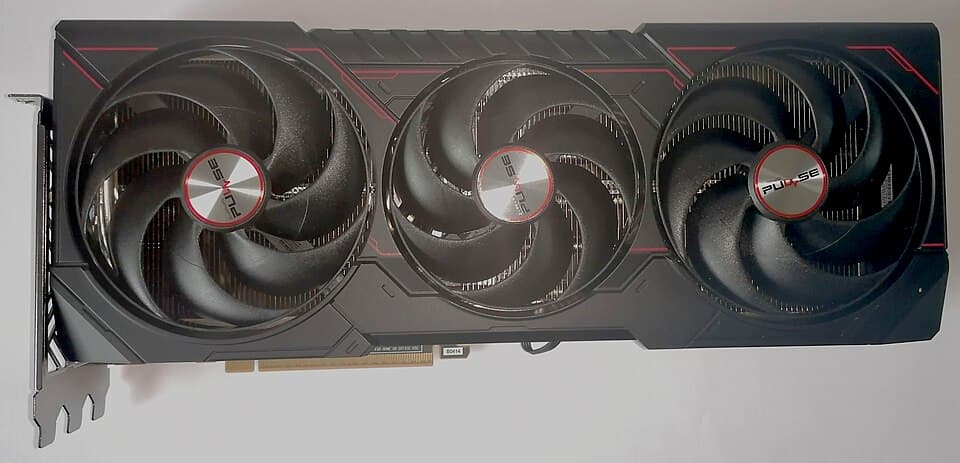
Every figure on this table is a design target. None of it is a measurement.
Nothing above describes how a graphics card behaves twenty minutes into a sustained workload, which is where two chips with nearly identical specifications routinely diverge. A boost clock is a ceiling the vendor permits, not a rate the chip sustains, and whether it holds depends on the cooling, the case, the power profile and the room. None of those appear on a specification sheet.
We deliberately do not reduce these figures to a single score. A composite invented from specifications would look authoritative and measure nothing, and choosing the weights would be choosing the winner.